50 years since the market premiere of the most Bulgarian Moskvich
In the first half of the 1970s, AZLK had the ambition to update its production to the level of VAZ and to somewhat revive exports. Work on the modernization of the 408 and 412 models produced at the same time began in 1973, and traditionally the units and components of the basic versions were completely identical, with the exception of the power unit. The first pre-production models rolled off the assembly line in December 1975, but the transition to the new model was gradual (some of the earliest versions retained some of the body panels and interior details from the older model) piese auto online.
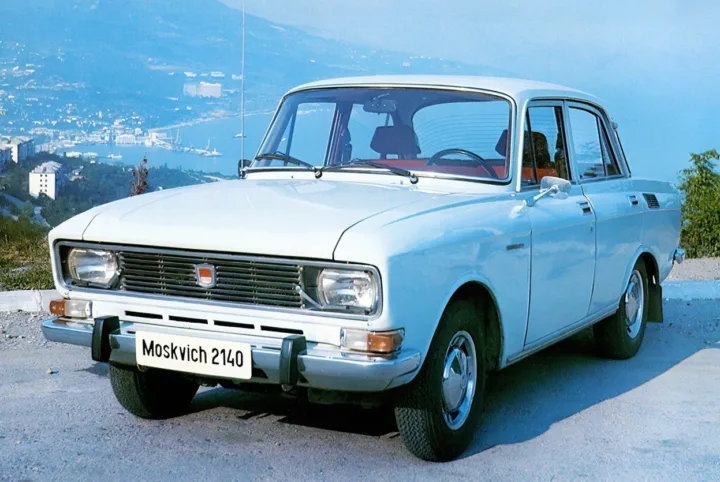
In accordance with the current industry standard, the restyled Moskvich sedan with the UZAM-412 engine received the designation Moskvich-2140, while the version with the M-408 engine became the Moskvich-2138. In the mid-1970s, the M-408 engine was already considered outdated and not powerful enough (50 hp), and did not provide the necessary performance, which is why its production was discontinued in 1981.
Between 1981 and 1982, the Moskvich-2140 underwent several phases of modernization, including the introduction of new front seats with improved ergonomics, a new rear axle, redesigned front doors (without small side windows) and improved door, hood and trunk locking mechanisms. The steering, suspension and gearshift mechanism were modified, and improved shock absorbers were added. The interior ventilation and heating systems were also significantly improved, and new seat belts were installed. At the same time, the appearance became somewhat simpler: the decorative chrome wheel covers disappeared, the rear panel was no longer painted black, the chrome edging of the grille, the emblems on the front fenders and under the right taillight were also removed. The large factory emblem on the radiator grille was replaced with a relief inscription AZLK.
Since 1984, the bodies have been stamped from steel produced by the Zaporozhye Metallurgical Plant, instead of the previously used rolled steel from the German concern Krupp. To standardize and reduce costs, the interior is equipped with a steering wheel from the 2140 SL and plastic headrests from the same model.
By 1985, the bumper corners also began to be made of plastic, similar to those of the VAZ-2106. Subsequently, from 1986 to 1988, the design of the already completely outdated model continued to undergo changes, primarily related to reducing production costs. In 1987, the ashtrays in the rear door trim and the metal moldings at the junction of the roof and the rear pillars were removed, as well as the chrome window sealing strips.
Production of the model was finally discontinued in July 1988, when the enterprise was already reorganizing for the adoption of the completely new model 2141.
- 2026-09-21 - Top 10 12 to 13 year old models according to TÜV: Audi Q5 (8R)
- 2026-09-19 - "Moskvich" 403: the transitional model
- 2026-09-18 - Mercedes CLS 63 AMG Shooting Brake: the most beautiful Benz station wagon in history has a cherry trunk floor
- 2026-09-17 - Powerliner: new generation of powertrains for higher efficiency from Mercedes-Benz Trucks
- 2026-09-16 - Renault saves fuel with the help of a computer 45 years ago
- 2026-09-15 - Mercedes now holds the record for most Formula 1 wins alongside Ferrari
- 2026-09-14 - The Maserati legend comes to Bulgaria - a retrospective
- 2026-09-13 - The new Spring – no longer from China, but from Slovenia (VIDEO)
- 2026-09-12 - Wind in your hair, flies in your teeth and 9000 rpm: the new Porsche 911 GT3 S/C (VIDEO)
- 2026-09-11 - Škoda Beta: 30 years ago another Bulgarian project failed