The first and only Mazda MX-3 turns 35
Exactly 35 years ago, with the all-new MX-3, Mazda entered the economy-sport segment, which was a somewhat unexpected and surprising move for the Japanese manufacturer. Although it did not appear on the market at the best time due to the economic recession, the MX-3 had to compete with other serious contenders such as the Nissan NX and Geo Storm. The platform used, designated EC, shares many common elements with the BG platform of the then Familia/323/Protegé series magazin de piese auto online.
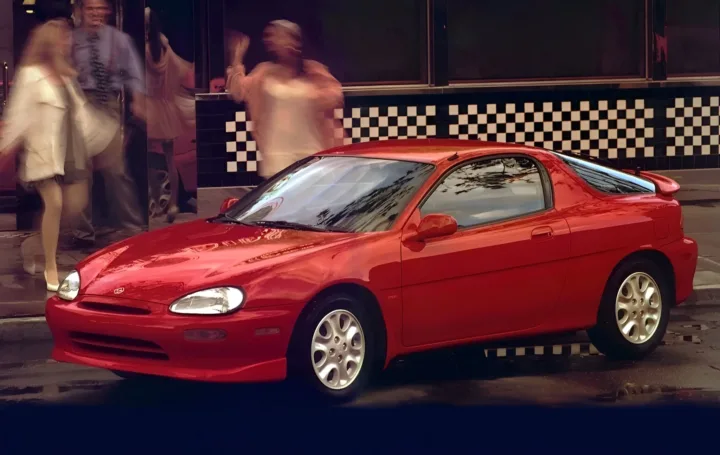
From the outside, the MX-3 looks like a true sports car, not a sedan that has been tweaked to look sporty. The striking front end not only enhances the car's looks, but also its image, especially in higher trim levels and more powerful versions. On the sides, the wide doors allow easy access to the cabin, while the curved rear window that covers the trunk is heavily inspired by the RX-7. The sporty look is complemented by the small rear spoiler. The minimalist-looking interior at first glance has enough features to be attractive. In this regard, it should be noted that the dashboard is not borrowed from other Mazda models, and is unique to the MX-3. It features a large central speedometer, with the rev counter to the right of it, and the fuel level and temperature indicators to the left. The center console houses the ventilation controls and the air conditioning button.
Despite its compact dimensions, the MX-3 managed to fit an extra pair of seats in the back (with slightly limited legroom), but was officially classified as a 2+2. The biggest surprise, however, was under the hood. In addition to the base 1.6-liter four-cylinder engine, a version with a 1.8-liter V6 engine was also offered, which at that time was also the smallest V6 on the market. The choice of this balanced and smooth-running unit was made so that the small coupe could stand out among its competitors in its market segment. In January 1994, a version of the familiar B6 engine, the B6D with two overhead camshafts, was launched. This provided an effective increase in power, but at the same time made the new V6 much more expensive. As a result, sales of the model in the United States ended that same year, although they continued in Canada and many other export markets.
The unique Mazda MX-3 was only produced for one generation (1991-1998), as the MX-5 proved to be much more popular and sought after. Another reason for its short career was related to Japan's economic problems in the 1990s, when the company was forced to stop producing models that were not selling well enough.
- 2026-06-23 - Polonez Truck: how the Polish car of the future became a pickup truck
- 2026-06-22 - Skoda Karoq – the successor will appear in 2028
- 2026-06-20 - 4 electric motors for hypercars with over 3000 hp.
- 2026-06-19 - 30 years since the premiere of Renault Mégane in Bulgaria
- 2026-06-18 - 40 years since Tatra's debut at Paris-Dakar
- 2026-06-17 - VAZ-2104: 40 years since the debut of the last Soviet station wagon on the Bulgarian market
- 2026-06-16 - DS flagship becomes ambassador for generative artificial intelligence
- 2026-06-15 - VW is now accepting orders for the updated Multivan and California
- 2026-06-13 - 281 horsepower for the new Peugeot PEUGEOT E-208 GTi
- 2026-06-12 - 70 Toyota Hilux will be used to guard the Bulgarian border