Algorithms at the forefront, drivers at the back: where is F1 heading?
The era of new powertrains was meant to make Formula 1 more sustainable and modern. But even the first tests reveal that the championship is facing a serious communication problem piese auto online.
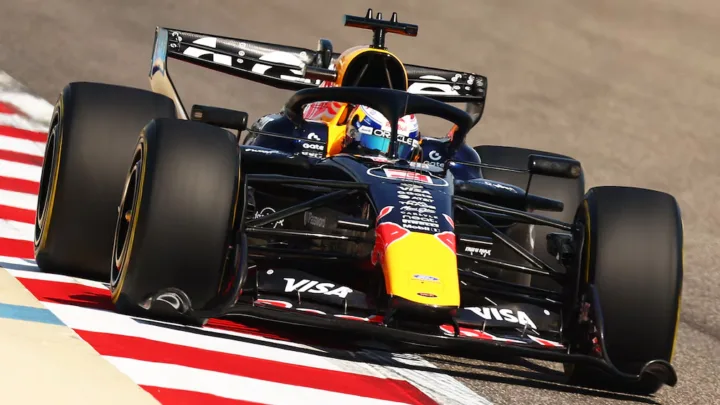
Max Verstappen, Lewis Hamilton and Fernando Alonso are not among the Formula 1 drivers who are afraid of challenges. The three "big ones" have won a total of 13 championship titles, both with sophisticated hybrid cars and challenging V10 beasts.
But when, after the first tests, this trio of gods says the new energy management system is “absurdly complex” (Hamilton), turns the top class into “Formula E on steroids” (Verstappen) and even allows the team chef to drive (Alonso), Formula 1 is facing a real problem.
Are Formula 1's new powertrains too complex?
Let's remember that from 2026 the balance of power sources for the drive changes significantly - almost 50 percent of it now comes from the electric motor. This means that energy is not only used, but also stored and released again - and calculations are made for all this. Constantly. Audi's Nico Hulkenberg's steering wheel revealed how the battery is fully charged in seconds - and drained just as quickly.
While the driver is still turning the wheel, software algorithms increasingly determine when the optimal moment is to release or recover energy. This new reality forces the driver to act as an “energy manager” throughout the lap. Lift and Coast (lifting the foot off the accelerator and coasting) for a few hundred meters in qualifying, downshifting to first gear for additional recuperation – all of this happens in the new cars.
This leads to an unusual driving style: slow through the turns, faster in the middle of the straights, easing off the throttle towards the end. Or to put it metaphorically: the gladiator behind the wheel takes a back seat to the chess player in the cockpit.
"None of the fans will understand," Hamilton believes. And that should be interpreted not so much as an expression of disappointment as a stark warning. The main question is - will the sport become more demanding or simply more complex with this new technology?
Formula 1 wanted to become more sustainable, more technological and more up-to-date with the revolution in the rules. This is understandable from a political and strategic (for the entire automotive industry) point of view – even logical. Audi, for example, would not have entered the championship if it did not have new drive systems. But the more algorithms calculate optimal performance, the harder it becomes to see what a driver can do – and to make the best one stand out from the rest.
The problem is that Formula 1 thrives on the principle of direct competition, on the idea that the fastest wins. On the sport itself. When energy flow management regimes, software and artificial intelligence dominate, the focus shifts – and the driver is left in the background at the expense of technology.
There's no way Verstappen, Hamilton and company's mouths can be shut
Apparently, the FIA people expected Verstappen, Hamilton, Alonso and others to rebel. That is why the press was deliberately not allowed at the Barcelona tests – but now the F1 stars are revealing what they think. Verstappen was subsequently reprimanded and asked to be more restrained: you can imagine the Dutchman's reaction. Because no one can silence a champion who reveals the truth. On the contrary: attempts to "cut" Max will only make things worse.
Are Verstappen and company about to push F1 into a deep crisis? Not yet – because at this stage the test kilometres covered are too few – and it is far from certain that the races in the new season will not be exciting.
But the people behind Formula 1, led by series boss Stefano Domenicali, are now walking on very thin ice. They must overcome resistance to innovation while not shifting the focus to the drivers in their fast cars. If the drivers are having fun, their enthusiasm will rub off on the fans.
However, as impressive as the “new” Formula 1 may be from a technological perspective, it must remain understandable to the audience – and this is where the role of commentators becomes more significant. Because ultimately, it is not the algorithm, but the human audience that determines the fascination of Formula 1.
- 2026-09-19 - "Moskvich" 403: the transitional model
- 2026-09-18 - Mercedes CLS 63 AMG Shooting Brake: the most beautiful Benz station wagon in history has a cherry trunk floor
- 2026-09-17 - Powerliner: new generation of powertrains for higher efficiency from Mercedes-Benz Trucks
- 2026-09-16 - Renault saves fuel with the help of a computer 45 years ago
- 2026-09-15 - Mercedes now holds the record for most Formula 1 wins alongside Ferrari
- 2026-09-14 - The Maserati legend comes to Bulgaria - a retrospective
- 2026-09-13 - The new Spring – no longer from China, but from Slovenia (VIDEO)
- 2026-09-12 - Wind in your hair, flies in your teeth and 9000 rpm: the new Porsche 911 GT3 S/C (VIDEO)
- 2026-09-11 - Škoda Beta: 30 years ago another Bulgarian project failed
- 2026-09-10 - Another Chinese model receives 5 stars for safety from Euro NCAP