Do autonomous trucks solve the driver shortage problem?
Autonomous trucks bring significant benefits to safety, efficiency and environmental protection, but they also represent an urgently needed solution to one of the biggest challenges facing the transportation industry: the chronic shortage of drivers piese auto online.
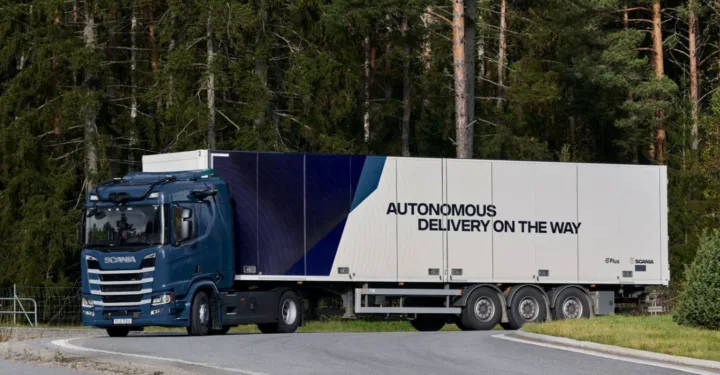
Artificial intelligence is gradually taking an increasingly visible place in society, and the transportation industry is no exception.
Autonomous, driverless transport is gradually becoming a key part of the future transport mix. At Scania, we are already delivering autonomous trucks to a mining customer in Australia and are actively participating in tests of autonomous vehicles with safety drivers on board for highway logistics in Sweden and Germany. Among the main benefits of autonomous trucks are increased safety on roads and in industrial sites, higher productivity and reduced carbon emissions.
South America, several European countries, and China also emerge as key potential markets for applications in both the mining and logistics industries.
Reducing the number of drivers
But what does autonomous transportation mean for truck drivers? Like other industries affected by artificial intelligence, there are concerns that autonomous vehicles could lead to mass layoffs.
The reality, however, is quite different. Varying rates of technology adoption and changing regulations mean that the transition to autonomous transportation will not happen overnight in all segments. More importantly, the transportation industry is already facing a chronic shortage of drivers.
Our clients in the mining industry say that finding sufficiently qualified drivers is becoming increasingly difficult due to the high demands of the profession. In the road transport sector, long periods away from family are a key factor in reducing the number of drivers. The stronger the competition to attract and retain staff, the higher the costs become. In a number of regions around the world, including Europe, this sometimes leads to delays in deliveries and increased transport costs.
These are not just perceptions. The International Road Transport Union (IRU) showed in 2024 that there were 3.6 million unfilled driver positions in 36 countries that generate 70% of the world’s GDP. And an analysis of the age structure shows that this decline will continue: 31.6% of truck drivers are 55 years old or older, while only 6.5% are under 25.
With 3.4 million drivers projected to retire in 26 countries by 2030, the world is facing a global human resources crisis in a sector that Scania and other industry leaders describe as the “bloodline” of society – due to its key role in keeping goods flowing and mines and other manufacturing units running. We have already seen the impact during the COVID-19 pandemic, when severe disruptions to supply chains led to significant delays or even the suspension of deliveries.
The added power of autonomous vehicles
It is becoming clear that autonomous vehicles play a significant role in overcoming the growing driver shortage.
In mining operations, unmanned vehicles can be programmed to operate continuously, increasing productivity without exposing human operators to potential risks. On highways, autonomous trucks maintain a steady flow of freight during periods of reduced traffic, while also helping to reduce emissions.
It is also important to emphasize the complementary nature of autonomous solutions. Job roles will evolve, as they always have, but people will remain a key element – as operators in control centers coordinating autonomous trucks, in support roles such as first and last mile drivers or for transporting dangerous goods.
Autonomous trucks represent a real solution to the chronic driver shortage. This, combined with the safety and environmental benefits, makes it absolutely imperative that Scania – as a leading manufacturer in the transport industry – continues to invest in and explore autonomous transport solutions for our shared future.
- 2026-09-19 - "Moskvich" 403: the transitional model
- 2026-09-18 - Mercedes CLS 63 AMG Shooting Brake: the most beautiful Benz station wagon in history has a cherry trunk floor
- 2026-09-17 - Powerliner: new generation of powertrains for higher efficiency from Mercedes-Benz Trucks
- 2026-09-16 - Renault saves fuel with the help of a computer 45 years ago
- 2026-09-15 - Mercedes now holds the record for most Formula 1 wins alongside Ferrari
- 2026-09-14 - The Maserati legend comes to Bulgaria - a retrospective
- 2026-09-13 - The new Spring – no longer from China, but from Slovenia (VIDEO)
- 2026-09-12 - Wind in your hair, flies in your teeth and 9000 rpm: the new Porsche 911 GT3 S/C (VIDEO)
- 2026-09-11 - Škoda Beta: 30 years ago another Bulgarian project failed
- 2026-09-10 - Another Chinese model receives 5 stars for safety from Euro NCAP