Honda Accord turns 50
The name Accord is an artistic metaphor for Honda's long-standing and tireless efforts to achieve harmony between man and car through the implementation of increasingly modern and contemporary technologies. The introduction of the first Accord in the spring of 1976 was a significant event, both for Honda and for the automotive industry as a whole. For the Japanese company, which at that time was better known for its economical Civic model, this was the first step towards becoming a manufacturer of a much wider range of models, as well as a significant presence in the foreign (especially the American) market. The Accord embodied a new kind of practical car that combined economy and value with sporty style and energetic performance piese auto online.
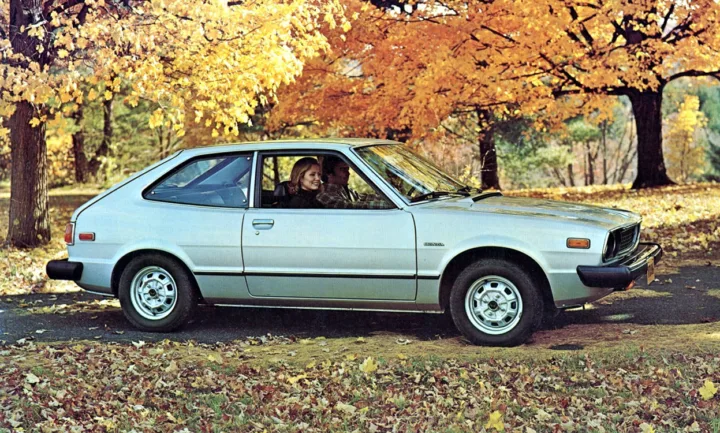
The first generation of the Honda Accord was launched on May 7, 1976, with the only body type offered that year and the following year being a three-door hatchback with a wheelbase of 2,380 mm and a weight of around 900 kg. The chassis used a partially revised platform of the earlier Civic with a length of 4,125 mm. The long-stroke engine is also derived from the Civic, with maximum power in Japan and Europe being 80 hp, while in versions for the North American market it was reduced to 68 hp. To keep up with the ever-tightening regulations on the level of harmful emissions, the engine is equipped with Honda's patented CVCC (Compound Vortex Controlled Combustion) technology for pre-chamber ignition, first introduced in 1975.
The Accord sold well, both for its attractive appearance and its modest size and excellent fuel economy. It was one of the first Japanese sedans to feature cloth seats, a tachometer, intermittent wipers, and an AM/FM radio as standard equipment. In 1978, an LX version was added, offering air conditioning, a digital clock, and power steering (power steering was not available on cars under two liters until the arrival of the Accord and its closely related Prelude). Japanese buyers paid a slightly higher annual road tax than the more compact Civic, which also had a smaller engine.
On October 14, 1977, the range was supplemented by a four-door sedan, and along with this, versions with larger engines of 1599 cc and 72 hp were introduced.
Technically, the sedan is identical to the hatchback, with the wheelbase remaining unchanged, but the full-size trunk is moved further back than usual. The roof is slightly higher to provide more comfort in the cabin, and the Accord Sedan is the first Honda in Japan to feature typical Japanese mid-range features such as ornate hubcaps and luxurious seat covers.
In 1980, the optional two-speed Hondamatic semi-automatic transmission became a three-speed fully automatic transmission (a four-speed automatic transmission was not used in the Accord until 1983).
The instrument panel has been redesigned, with text warning lights and instrument markings replaced almost everywhere with pictograms.
- 2026-04-21 - Toyota beats Ferrari on the Italians' "home" track
- 2026-04-20 - Citroën records solid sales growth in the first quarter
- 2026-04-19 - Mercedes SLR 722 S McLaren Edition goes up for auction
- 2026-04-18 - 20 years ago, a Bulgarian made his debut in Formula 3
- 2026-04-17 - Video reveals how quickly a pileup can happen on the highway
- 2026-04-16 - The MINI x Vagabund tandem: when the Countryman becomes a mobile disco
- 2026-04-15 - Tesla "Full Self-Driving" – now permitted in the Netherlands
- 2026-04-14 - Skoda's innovative bicycle bell "breaks" noise cancelling headphones
- 2026-04-13 - Bulgarian Lyuboslav Ruikov recorded his first victory in the Formula 4 rookie class
- 2026-04-12 - Abt reveals a sporty version of the future Audi A2?