What technologies does Continental use to combat tire noise?
Tire noise is an annoyance for many drivers – and city dwellers – even more so. Continental has a solution to the problem – at least to a large extent magazin de piese auto online.
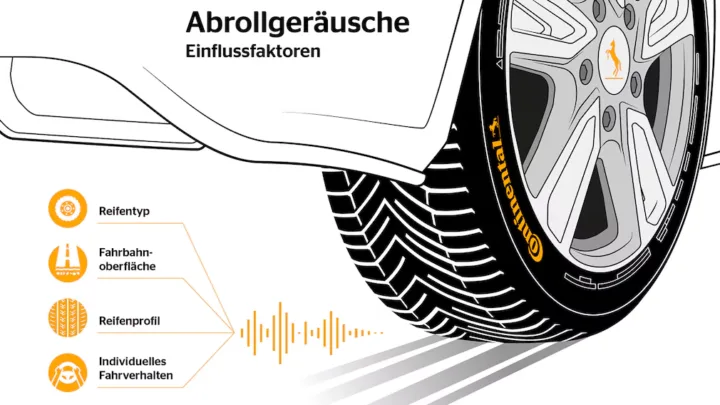
Traffic noise is one of the biggest environmental problems of our time – because it burdens many people, especially in cities.
"Noise, especially from traffic, is a major burden for people and the environment. With our tire technologies, we actively reduce rolling noise – without compromising safety," says Achillefs Tsotras, Head of Tire-Vehicle Interaction at Continental.
The problem is becoming more and more noticeable – especially with the development of electric mobility. When the engine is not heard, the noise from the tires comes to the fore.
Why do tires make noise?
The noise is mainly caused by the contact between the tire and the road. The rolling sound is usually most pronounced in the 30-50 km/h and 80-100 km/h ranges.
At lower speeds, the engine often drowns out tire noise, while at higher speeds, wind noise dominates. Somewhere in the middle, the tires come to the forefront for the ear.
Continental's new trick: tread pattern against unpleasant sound
Continental relies on a special tread pattern – a technology called Silent Pattern. In this, the tread blocks are intentionally spaced unevenly. This eliminates the constant buzzing sound typical of conventional tires.
Instead, the noises overlap and are partially neutralized. The principle is reminiscent of how noise-canceling headphones work – and the technology is already used in models like the Continental EcoContact 7.
Reduced interior noise
Continental also offers the so-called ContiSilent technology. In this, a special foam is applied to the inside of the tire. This reduces vibrations and noise in the interior by up to nine decibels.
This is very noticeable, as a ten-decibel reduction is perceived by the human ear as half the volume. Continental emphasizes that no compromises were made with safety, fuel consumption or performance when making the quieter tires.
Even the wet braking and rolling resistance indicators were at a high level. This is proven, for example, by the VanContact A/S Eco, which achieved the highest scores in all categories according to the EU classification.
Conclusion
With new tread patterns and additional insulation, tire noise can be significantly reduced. This is becoming increasingly important, especially for electric cars – and provides more comfort in everyday driving.
- 2026-03-23 - Welcome to the Porsche Battery Kitchen in Slovakia
- 2026-03-21 - Max Verstappen to race against David Schumacher at the Green Hell
- 2026-03-20 - Clean petrol and manual transmission: Fiat presents a new version of the 600
- 2026-03-19 - 50 years since the premiere of the Renault 14: the story of a failure
- 2026-03-18 - A modern Renault showroom opened in the capital (retrospection)
- 2026-03-17 - The "Volga" that wanted to be a "Seagull"
- 2026-03-16 - 15-year-old steals bus and drives it over 100 kilometers
- 2026-03-14 - Mercedes S 680 Guard and Mercedes AMG S 63 E Performance: two high-level meetings
- 2026-03-11 - Volkswagen Commercial Vehicles celebrates 70 years of its Hanover plant
- 2026-03-10 - China's electric Audi turns out to be a failure