50 years since the premiere of the Renault 14: the story of a failure
In 1976, the standards of Western European drivers were quite high, and to meet them, Renault decided to attract them with a truly modern, compact, economical and safe car. This was to be achieved with the launch of the Renault 14, designed to fill the gap between the Renault 5 and the Renault 20. The company's engineers put a lot of effort into creating the new hatchback, prioritizing comfort and interior space. It was distinguished by large gray plastic bumpers, and its body was tested in a wind tunnel and was one of the first to be designed using a computer in an attempt to achieve maximum fuel economy. It was also subjected to a series of crash tests, and its interior was redesigned several times during development. The stakes were high, as the R14 had to conquer the compact car market, attract buyers of the aging R6 and aim for first place in the European market, overtaking the VW Golf magazin de piese auto online.
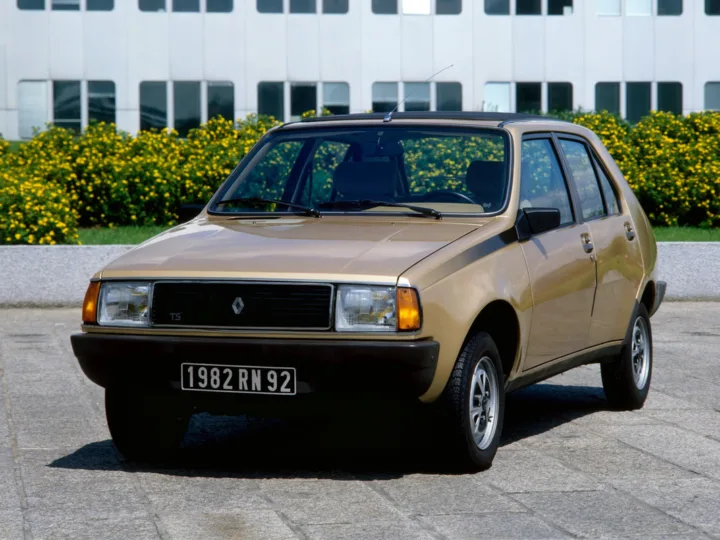
The Renault 14 was presented in Paris in May 1976, but the reception from journalists was rather reserved. They criticized its nondescript style and lack of individuality. The company management, in turn, pinned such high hopes on the model's success that the workforce at the factory was increased from 4,000 to 5,000 employees, but the first few months on the market proved the critics right. None of the 489 Renault dealers in France rushed to place orders, and only 58,048 units were sold for the 1976 model year. In this regard, it should be noted that dealers also found it difficult to accept the kind of "betrayal" on the part of the elite manufacturer, who equipped the R14 with an engine from the Peugeot 104 ZS. Some of them directly refused to sell it. They also criticize the lack of power, as the 4-cylinder engine produces only 57 horsepower, the top speed barely reaches 140 km/h, and the equipment of the L and TL versions does not impress anyone.
At the beginning of 1977, the model was only in 10th place in sales and Renault decided to take appropriate action. This included a large-scale advertising campaign in which the Renault 14 was shaped like a pear with little space in the front for the transversely mounted engine and a spacious passenger compartment for maximum comfort. All metro stations and bus stops were plastered with images of happy passengers sitting in a pear, which on the one hand was a rather vague and contradictory message, and on the other hand showed that the marketing team was definitely not in the clear with the cultural symbolism of this fruit. The advertising campaign caused dismissive reactions, and the tragedy of the Renault 14 was that it did not get a second chance to create a good first impression.
In the last attempt, Renault revised the range with the more luxurious GTL version, equipped with a center console, a quartz clock, new wheels and glove compartment lighting. Although the power was also increased to 69 horsepower, the competition in this segment was extremely fierce. The TS versions with spectacular black stripes on the front wings and electric windows also proved to be insufficiently attractive. The industrial career of the model ended in 1984 with the production of a total of 999,193 units, which, despite all the misadventures accompanying the evolution of the Renault 14, was actually a pretty good result.
- 2026-03-18 - A modern Renault showroom opened in the capital (retrospection)
- 2026-03-17 - The "Volga" that wanted to be a "Seagull"
- 2026-03-16 - 15-year-old steals bus and drives it over 100 kilometers
- 2026-03-14 - Mercedes S 680 Guard and Mercedes AMG S 63 E Performance: two high-level meetings
- 2026-03-11 - Volkswagen Commercial Vehicles celebrates 70 years of its Hanover plant
- 2026-03-10 - China's electric Audi turns out to be a failure
- 2026-03-09 - The Citroën C5 Aircross plug-in hybrid - now more powerful
- 2026-03-08 - Nikola Tsolov won his first victory in Formula 2
- 2026-03-07 - Seven seats in four meters of length – and super cheap
- 2026-03-06 - Strong qualification for Nikola Tsolov in Australia