In search of identity: 50 years since the debut of the Citroën LN
The Citroën LN and Citroën LNA were city cars produced from 1976 to 1986, as an in-house derivative of the Peugeot 104 (introduced in 1972, shortly after Citroën's takeover by Peugeot). Introduced in July 1976, the LN was essentially a combination of the Peugeot 104 Z bodywork and the 602 cc twin-cylinder engine of the Citroën 2CV. Equipment levels were limited, but its key advantages were its low running costs and affordable price magazin de piese auto online.
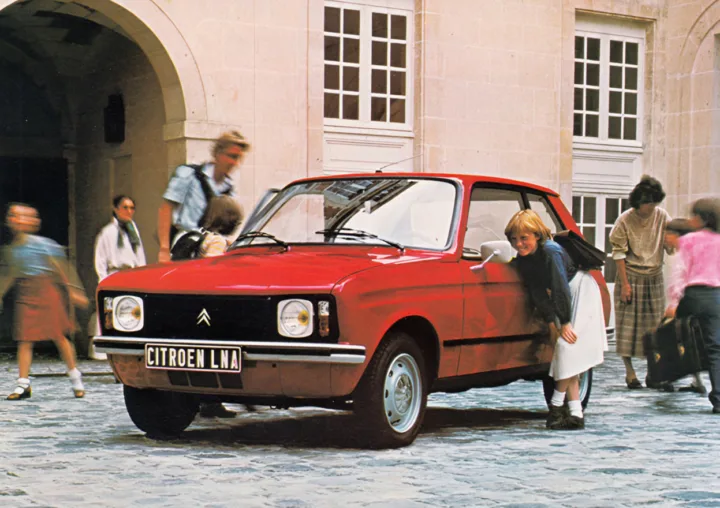
The appearance of the LN came in sharp contrast to the assurances that the two brands would retain their individuality. When Citroën was forced to give an official answer to this question, they explained that the LN project was a compromise solution imposed by the urgent “need to provide customers and the dealer network with a model that would strengthen Citroën’s position in the lower segment of the market”. At the same time, the company’s small car range included the Ami and Dyane, as well as the beloved 2CV, which continued to be produced for quite a long time after the others. Citroën clearly stated on the occasion of the LN that this would not happen again, which remained largely true, at least until the arrival of the Citroën Saxo, a variant of the Peugeot 106 (developed on the Citroën AX platform).
Initially, Citroën offered the LN mainly in southern Europe, but in November 1978 its more powerful successor, the LNA, was launched and sold in most other countries. It was equipped with a more modern 652 cc two-cylinder Citroën Visa engine with electronic ignition, and the added letter "A" stood for Athlétique.
In December 1982, a 1.1-liter four-cylinder engine was launched, which reached a top speed of nearly 145 km/h and effectively put an end to the two-cylinder models in many markets. The LNA, like its predecessor, was still cheap and easy to maintain. For Italy and France only, there was an intermediate version called the LNA 10E, with a 954 cc engine from Peugeot.
By 1980, the so-called LNA Entreprise was also available on the French market with the rear seat removed, thus allowing the car to be sold at a reduced rate of value added tax.
In July 1982, a modernized version was introduced, featuring new black plastic bumpers, new decoration on the rear pillars, a repositioned rubber strip on the side, new larger taillights set on a black-painted rear panel, black chrome window frames and more intricately shaped rims identical to those on the Visa Super E. The interior was also improved, and the folding rear seat was now divided.
In July 1985, a new facelift was made, with the black grille and bumpers being tinted grey, and in the summer of the following year, production of the LNA was discontinued, with its successor, the Citroën AX, debuting shortly afterwards. The Peugeot 104, in turn, remained in production until 1988, although its popular successor, the 205, was launched five years earlier.
- 2026-03-10 - China's electric Audi turns out to be a failure
- 2026-03-09 - The Citroën C5 Aircross plug-in hybrid - now more powerful
- 2026-03-08 - Nikola Tsolov won his first victory in Formula 2
- 2026-03-07 - Seven seats in four meters of length – and super cheap
- 2026-03-06 - Strong qualification for Nikola Tsolov in Australia
- 2026-03-05 - Saab 9-5: the aging Swede (retrospection)
- 2026-03-04 - New base engine for Volvo EX30
- 2026-03-03 - 1978 Chevrolet Camaro: raw power
- 2026-03-02 - Peugeot 604: the American challenge
- 2026-02-28 - Volkswagen sells its 2 millionth electric car